
How Astrology and Tarot Work Together
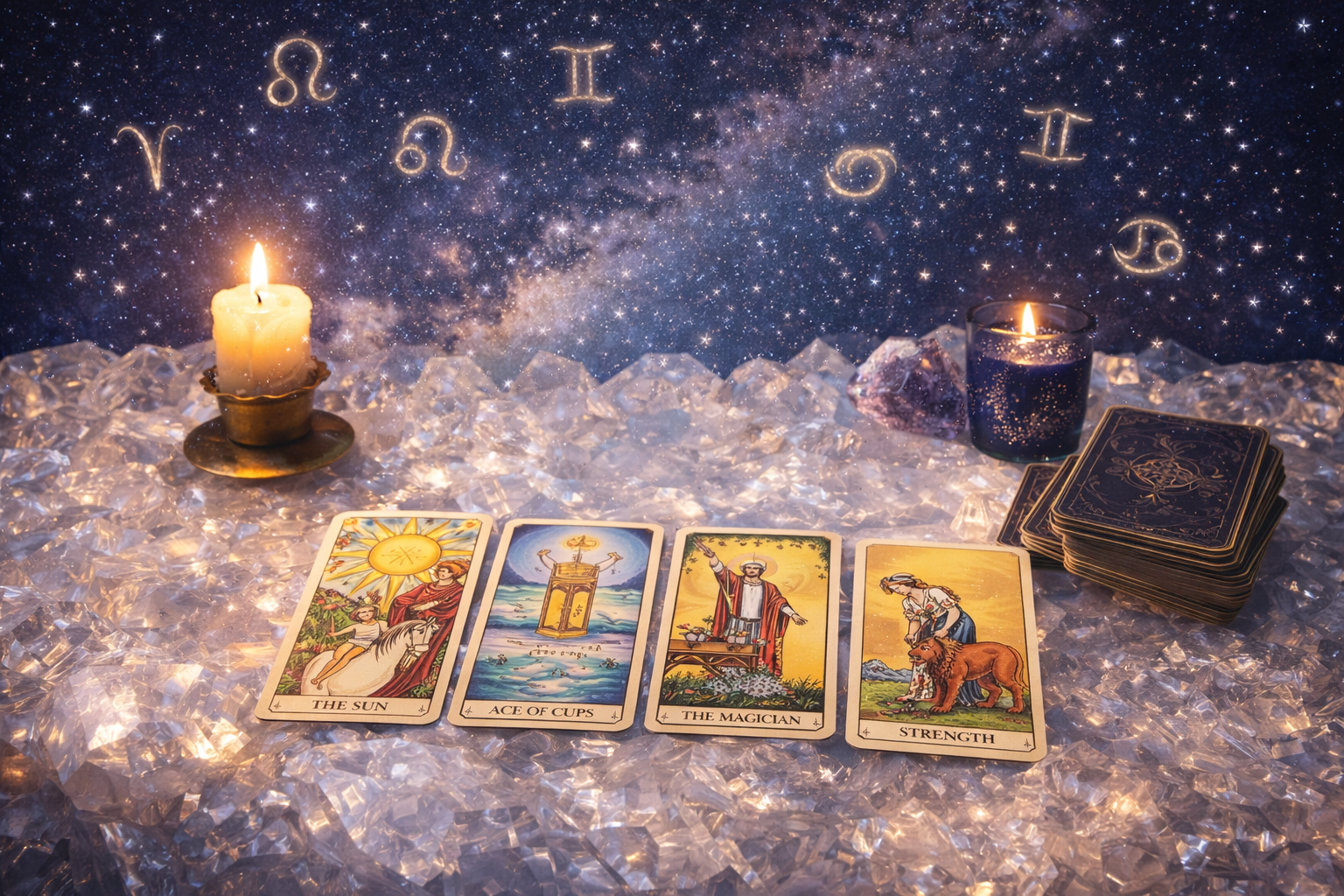
Astrology and tarot are often discussed as separate systems, but structurally they speak the same symbolic language. Both organize human experience through archetypes. Both rely on elemental balance to describe how different types of energy express themselves in the world. Rather than predicting fixed outcomes, both systems help us recognize patterns and cycles that influence how we experience particular moments in time.
Astrology observes these patterns through the movement of celestial bodies and the structure of the zodiac. Tarot expresses them through symbolic imagery and archetypal storytelling within the cards. One system maps the larger energetic climate, while the other explores how that climate may be experienced internally and behaviorally.
When these systems are viewed together, they reveal a shared foundation. One of the clearest places this connection appears is through the elements.
This is why the monthly tarot readings on the Veil & Arcana blog are organized by element rather than individual zodiac sign. Astrology groups the zodiac into Earth, Water, Air, and Fire, and tarot reflects those same elemental principles through its four suits. When a tarot spread is interpreted through this lens, the reading reflects how a particular elemental archetype may be expressing collectively.
Understanding this shared structure helps explain why elemental readings often resonate more clearly than generalized predictions. Instead of trying to forecast events, the goal is to observe the archetypal patterns influencing how we move through a particular moment in time.
The Shared Elemental Framework
In astrology, the twelve zodiac signs are grouped into four elements. Each element represents a different way of engaging with the world and processing experience.
Earth signs relate to structure, stability, and practical development. Taurus, Virgo, and Capricorn often focus on building something tangible and sustainable over time.
Water signs move through emotion and intuition. Cancer, Scorpio, and Pisces tend to experience life through depth of feeling, internal awareness, and relational sensitivity.
Air signs emphasize thought, communication, and perspective. Gemini, Libra, and Aquarius often approach situations through dialogue, analysis, and conceptual understanding.
Fire signs initiate movement. Aries, Leo, and Sagittarius tend to embody inspiration, motivation, and the instinct to act.
Tarot reflects this same elemental structure through its four suits. Pentacles correspond to Earth. Cups correspond to Water. Swords correspond to Air. Wands correspond to Fire.
These parallels are not accidental. The tarot developed within a philosophical framework that intentionally connects elemental theory, astrology, and archetypal symbolism. Each suit expresses the same fundamental energies that appear within the zodiac.
When a monthly tarot reading is organized by element, it draws directly from this shared structure. Rather than separating the zodiac into twelve isolated forecasts, the cards highlight the broader archetypal themes influencing each elemental group.
Elemental readings allow us to observe patterns rather than personalities. They reveal how a particular type of energy may be moving collectively, while still leaving room for individual interpretation.
The Zodiac Within the Major Arcana
The connection between astrology and tarot extends beyond the elemental suits. It also appears within the Major Arcana, where many of the cards reflect archetypal themes that correspond with the zodiac signs themselves.
Within the symbolic framework commonly used in modern tarot systems, certain Major Arcana cards are traditionally linked with specific zodiac archetypes because they express similar qualities of experience and development. These associations are not meant to turn tarot into astrology or vice versa, but they do reveal how both systems draw from the same archetypal language.
For example, Aries is often associated with The Emperor. Both represent the impulse to initiate, establish structure, and assert authority within the world. Libra is connected with Justice, reflecting the search for equilibrium, fairness, and the careful weighing of decisions. Scorpio is traditionally linked with the Death card, which in tarot represents transformation, the completion of cycles, and the profound shifts that allow new phases of life to emerge.
Other zodiac signs are reflected through their own Major Arcana correspondences as well, each highlighting a particular stage of archetypal development within the larger symbolic journey of the tarot. These connections form another bridge between astrology and tarot, showing how the zodiac’s energetic patterns can also be expressed through the narrative language of the cards.
You do not need to memorize these correspondences to benefit from a tarot reading. Their value lies in understanding that tarot operates within an organized symbolic system rather than a random collection of images. Each card represents an archetype that has been studied, interpreted, and refined across centuries of symbolic tradition.
Astrology approaches these archetypes through the movement of celestial cycles, describing how different energies rise and fall within the broader rhythm of time. Tarot approaches the same archetypal forces through story and imagery, revealing how those energies may be expressing themselves within human behavior, perception, and experience.
When viewed together, the two systems become complementary ways of observing the same underlying patterns. Astrology provides the structural framework of the archetypes, while tarot illustrates how those archetypes may unfold within the lived experience of a moment.
Court Cards and Archetypal Expression
Another layer of tarot’s symbolic structure appears within the court cards. While the numbered cards often describe situations or themes, the court cards tend to represent the ways elemental energy can move through human behavior, personality, and perspective.
Each suit contains four court figures: the Page, the Knight, the Queen, and the King. Rather than representing specific people, these figures illustrate different stages of development and expression within an element.
The Page often reflects the earliest stage of engagement with an elemental quality. Pages carry a sense of curiosity and openness, suggesting the beginning of learning or a new awareness emerging within that element.
Knights represent movement. They often embody the pursuit of an idea, emotion, or goal as it begins to take action in the world. Knights tend to express the more dynamic side of elemental energy, showing how it pushes forward, explores possibilities, and tests its direction.
Queens typically represent the internal mastery of an element. Their energy is reflective and perceptive, often showing how a particular elemental quality has matured into emotional intelligence, perspective, or intuitive understanding.
Kings, by contrast, tend to represent the outward expression of that mastery. Their archetype often reflects leadership, authority, and the ability to apply elemental wisdom in a visible and practical way.
For example, the Queen of Cups may symbolize emotional awareness and intuitive understanding within the Water element, while the Knight of Wands often reflects the momentum and enthusiasm associated with Fire.
Recognizing these patterns adds another dimension to interpretation. The cards are not only revealing which archetypal themes are present, but also suggesting how those energies may be expressing themselves through behavior, perspective, or decision making.
For readers who want to explore how these layers work together across the entire deck, the Tarot Foundations self study course goes deeper into how the suits, court cards, and Major Arcana function as an integrated symbolic system.
Astrology Provides Timing. Tarot Provides Narrative
Astrology and tarot often complement one another because they approach the same archetypal patterns from different angles. Astrology focuses on cycles. By observing planetary movement, seasonal shifts, and the relationships between celestial bodies, astrology helps map the larger energetic climate surrounding a particular moment in time.
These movements do not dictate events, but they do highlight periods when certain themes may become more noticeable. A planetary transit may emphasize communication, structural change, emotional sensitivity, or the need for reflection. In this way, astrology helps identify when particular archetypal energies are likely to be more active within the collective experience.
Tarot, by contrast, tends to focus less on timing and more on perspective. The cards reveal how those archetypal themes may be expressing themselves through our choices, reactions, and patterns of behavior. While astrology may describe the broader atmosphere, tarot often explores how we are moving within that atmosphere.
For example, astrology might indicate a period where transformation or transition is emphasized. A tarot reading can then illuminate how that shift is being experienced internally. The cards may reveal whether someone is resisting the change, working with it, or still trying to understand what is unfolding.
Seen together, the two systems offer a more complete view. Astrology provides the structural framework of timing and cycles, while tarot translates those themes into a symbolic narrative that reflects personal experience.
Neither system removes personal agency. Instead, they illuminate patterns that allow us to recognize where we are within a cycle and respond with greater awareness.
Why the Elements Matter in Monthly Tarot Readings
Because astrology and tarot share the same elemental framework, organizing a monthly tarot reading by element offers a meaningful way to observe broader energetic patterns. Rather than separating the zodiac into twelve isolated forecasts, the elemental approach allows us to step back and consider how a particular type of energy may be expressing itself across a group that shares the same archetypal foundation.
On the Veil & Arcana blog, the monthly readings are arranged through the four elements: Earth, Water, Air, and Fire. Each of these elements corresponds to three zodiac signs that tend to engage with the world through similar energetic tendencies. By interpreting the cards through this lens, the reading reflects how those shared archetypal qualities may be unfolding collectively during that particular period.
For example, Earth signs often engage life through structure, responsibility, and the desire to build something that can endure over time. When cards appear that emphasize stability, reassessment, or long term planning, those themes may resonate strongly within the Earth group. Fire signs, by contrast, frequently move through life with a sense of momentum and inspiration, which can make themes of action, direction, and motivation more prominent in their elemental readings.
Air signs may find themselves navigating questions of communication, perception, or shifting perspectives, while Water signs may encounter themes connected to emotional processing, intuition, and relational awareness. These archetypal tendencies do not limit the experience of any individual sign, but they do provide a useful framework for recognizing how certain patterns may be moving through the collective field.
Elemental readings are not intended to replace the depth of a personal birth chart or the nuance of an individual tarot session. Instead, they offer orientation. They highlight the larger symbolic currents that may be influencing a particular elemental group during a given month.
By approaching the reading in this way, the message remains grounded while still allowing each reader to consider how those archetypal themes may be expressing themselves within their own circumstances.
Why Tarot and Astrology Are Often Misunderstood
Tarot and astrology are sometimes misunderstood because they are frequently presented as tools for prediction rather than systems for interpretation. When viewed only through the lens of fortune telling, the deeper purpose of both practices can become obscured.
In practice, these symbolic traditions tend to function more like maps than declarations. They provide a framework for observing patterns, tendencies, and cycles that shape how experiences unfold over time. Instead of dictating events, they help illuminate the archetypal themes that may be influencing the landscape in which those events occur.
A tarot reading, for example, does not determine what will happen in the future. The cards reflect the symbolic dynamics present in a particular moment and suggest how those dynamics may be interacting with our current choices, perspectives, and emotional posture. In this sense, tarot offers a way to observe the story we are currently participating in, allowing us to recognize patterns that might otherwise remain unnoticed.
Astrology operates in a similar way, though its language is expressed through planetary movement and celestial cycles. Rather than prescribing outcomes, astrological transits describe energetic climates that can make certain themes more prominent for a period of time. These influences may highlight areas of growth, challenge, reflection, or opportunity depending on how they interact with an individual’s chart.
When approached responsibly, both systems encourage awareness rather than dependency. They offer symbolic language for understanding experiences that can sometimes feel abstract or difficult to articulate. By recognizing these patterns, individuals are better able to make thoughtful decisions about how they want to move forward.
This perspective also explains why Veil & Arcana readings emphasize interpretation and participation rather than prediction. The purpose of the cards is not to remove uncertainty from life, but to provide insight into the archetypal forces shaping the moment so that each person can engage with those patterns more consciously.
Where to Go Deeper
If you want to understand how these symbolic systems are structured, the Astrology Foundations self study course explores the zodiac, elements, and archetypal patterns that form the backbone of astrological interpretation.
If you want to learn how tarot reflects those same archetypes through its suits, Major Arcana, and court cards, the Tarot Foundations course provides a clear introduction to reading the deck as a symbolic system rather than a collection of isolated meanings.
For those who prefer applied insight rather than study, recorded tarot readings through Veil & Arcana integrate these symbolic languages into focused interpretation tailored to your personal situation.
Each monthly tarot reading offers a glimpse into the collective elemental patterns of the moment. Personal readings explore how those patterns intersect with your own path.
Both approaches begin with the same foundation: understanding the archetypes at work.
You can explore the current Monthly Tarot Reading by Element here.